


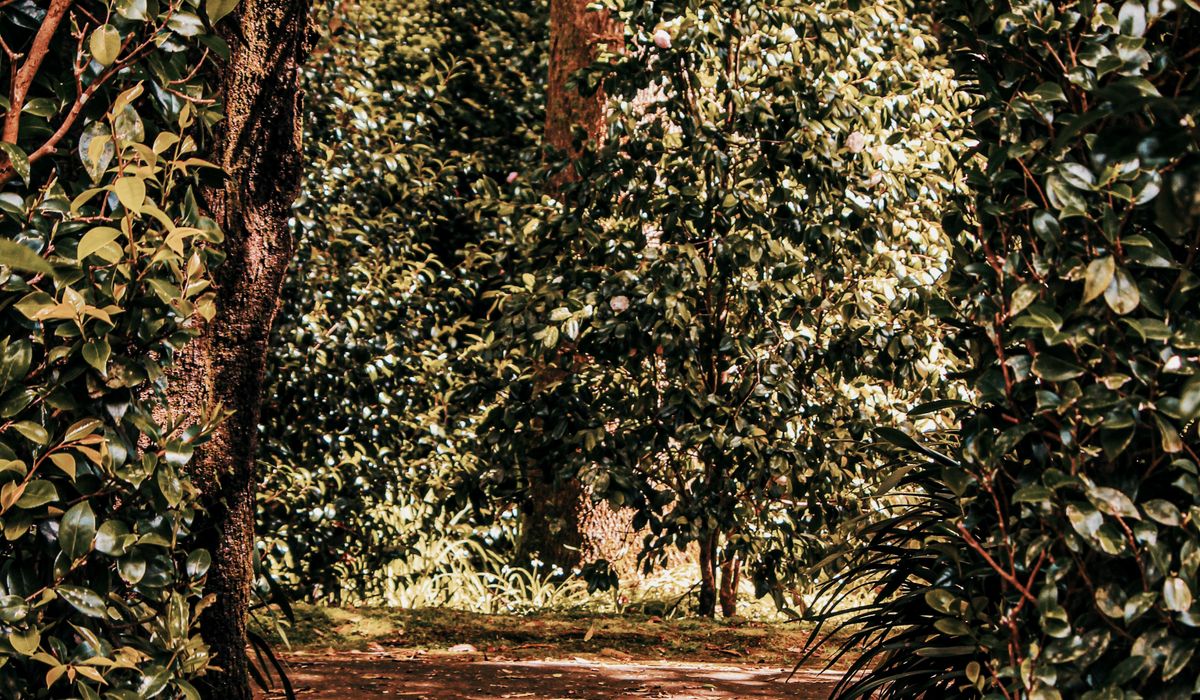
Why a North-Facing Wall Is Better Than It Looks
Most gardeners treat a north-facing wall as a problem to be solved rather than a place to plant. It is true that the wall never warms up properly, that frost lingers in its shadow, and that only a handful of plants will flower generously there. But shade is not the enemy. A cool root run and shelter from midday sun suit a surprising number of our native climbers, and the wall itself offers something rare in a small garden: vertical space, a sheltered microclimate and a structure waiting to be clothed.
Get the planting right and a north wall becomes the greenest, most wildlife-rich part of the garden.
Read the Wall Before You Buy
Two things matter more than aspect alone. The first is the rain shadow: the strip of soil within about 45cm of a wall stays remarkably dry, because the wall deflects rain and nearby tree roots compete for every drop. The second is the wall's surface. Old brick and lime mortar hold moisture and give self-clinging climbers something to grip, while rendered and painted surfaces are far less obliging.
Check also how much light actually reaches the wall. A true north wall gets no direct sun, but a north-east or north-west wall may catch an hour or two morning or evening, which widens your options considerably. Where you can, improve the soil with two or three spadefuls of garden compost or leafmould per planting hole, and set climbers 30–45cm out from the wall so their roots sit in ground that actually gets watered.
Native Climbers That Tolerate Shade
Our native climbers are woodland plants by ancestry, which is exactly why so many cope with a cool, shadowed wall. The following are reliable, widely available and genuinely useful to wildlife.
- Common ivy (Hedera helix) — the outstanding choice for a north wall. Self-clinging, evergreen, indifferent to shade and happy in most soils, including dry ones. Its late flowers, opening from September into November, are one of the best autumn nectar sources for bees, hoverflies and red admirals, and the black berries that follow feed thrushes and blackbirds in late winter. Keep it out of gutters and away from mortar joints you care about, and never let it climb into the crown of a mature tree.
- Honeysuckle (Lonicera periclymenum) — a twining native of hedgerows and woodland edges, flowering from June to September with that unmistakable evening scent. It flowers best with a little sun on its foliage, but tolerates shade well and will still perform. Moths, including the hummingbird hawkmoth, come to the flowers, and dormice eat the stems and berries in the west of Britain.
- Traveller's joy (Clematis vitalba) — our only native clematis, a vigorous scrambler for a wall you want covered fast. Creamy flowers in summer are followed by the silvery seedheads that give it its second name, old man's beard. It needs space and firm annual pruning; in a small garden it can become a thug.
- Hop (Humulus lupulus) — a herbaceous climber that dies back each winter, so it never smothers a wall permanently. It romps up a north-facing wall in a single season, and its foliage feeds the caterpillars of the comma butterfly. Grow it where you can cut it to the ground in late autumn.
Woody nightshade (Solanum dulcamara) is another native shade-tolerator, with purple, potato-like flowers and red berries, but every part is toxic and it is best left in the hedgerow rather than planted beside a path or play area.
Planting and Getting Them Established
Autumn is the ideal time to plant, while the soil is still warm and damp. Dig a hole twice the width of the rootball, fork the base, and mix in well-rotted organic matter. Set the plant at the same depth it was growing in its pot, firm it in and water thoroughly, even if rain is forecast.
Then give it a frame to grow up. Twiners such as honeysuckle and hop need horizontal tensioned wires spaced about 30cm apart on vine eyes, or a sturdy trellis set 5cm off the wall so air can circulate behind it. Ivy needs nothing at all, though a little tying-in during its first year helps it climb in the direction you want.
The critical period is the first two summers. Water deeply once a week in dry spells, and mulch with a 5cm layer of bark or leafmould, keeping it clear of the stems. After that, most of these plants are drought-tolerant enough to fend for themselves.
Pruning and Keeping the Peace
Prune to direct growth rather than to tidy. Honeysuckle is best trimmed lightly after flowering, cutting flowered shoots back to a strong pair of buds. Ivy should be cut hard in spring if it is heading somewhere it shouldn't, and clipped around windows and doors in early autumn. Traveller's joy can be cut to 30cm from the ground in late winter if it gets out of hand. Hop dies back naturally, so simply cut the dead stems to soil level in November and let new shoots come again in spring. Always check for nesting birds before any substantial cutting between March and August.
A Year of Wildlife on a Shady Wall
The reward for a little patience is a wall that earns its keep. In spring, ivy leaves shelter hibernating butterflies and the first bees; by June the honeysuckle is scenting warm evenings and drawing in moths. High summer brings hop foliage for comma caterpillars and honeysuckle berries beginning to form. Autumn is the wall's finest hour: ivy flowers in a haze of green and the garden hums with late bees, then the berries darken and the thrushes arrive. Even in January there is cover, shelter and something for the birds. A north wall, planted well, is never the dullest part of the garden — often it is the busiest.


Leave a reply